
MOST READ
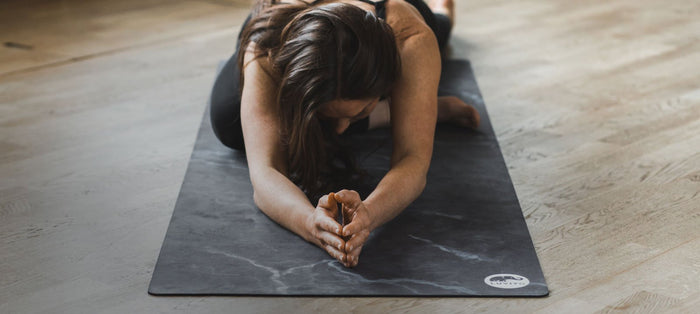

Hot yoga is guaranteed to make you sweat – LUVIYO
Winter is just around the corner. It's cold, dreary, and you snuggle under your blanket like a snail in its shell. You think back to your last trip to Bali and remember how much you enjoyed the yoga classes in the pleasant 28-degree weather. Your body felt incredibly soft, flexible, and ready for new asanas.
The arrival of the cold season triggers the exact opposite in you; you feel stiff and inflexible. And is that how it's supposed to stay until spring? Don't panic, we have a solution for you. With Hot Yoga, you can escape to tropical temperatures even in winter.
What is Hot Yoga?
 Yoga that will thaw you out.
Hot yoga is a general term for certain yoga styles practiced in a heated room. It is often a flowing Vinyasa style, with a series of linked poses. Depending on the style and studio, the room is kept at a temperature of 35 to 40 degrees Celsius.
If you've never tried this sweat-inducing form of yoga before, it might seem a bit overwhelming at first glance. After all, yoga alone can push your body to its limits. If you then imagine it in sauna-like temperatures, you might quickly conclude that it could potentially overload your body.
Hot yoga can indeed be very intense and strenuous, but with the right preparation, it's a wonderfully warming remedy for the particularly unpleasant days of the year. This article aims to help you prepare for your first or next hot yoga session to prevent physical exhaustion.
What is the difference between Bikram Yoga and Hot Yoga?
 The diversity of Hot Yoga – LUVIYO
You've probably heard of Bikram Yoga and are now wondering what the difference is between it and hot yoga. Hot yoga originated in the 1970s when the Indian yogi Bikram Choudhury first used heating devices in his yoga studio. Choudhury further developed his experiment and eventually settled on 40 degrees Celsius (104 degrees Fahrenheit) with 40 percent humidity. Today, the so-called Bikram method is a widespread style of yoga. Bikram consists of a series of 26 postures and two breathing exercises, which are performed in the same order in every class.
While Hot Yoga refers to any yoga class performed in a heated room, Bikram is the original form of Hot Yoga. In other words, Bikram Yoga always takes place in a heated room, but not every Hot Yoga class is Bikram.
Other forms of hot yoga include:
Baptiste Power Vinyasa Yoga
Named after its founder, Baptiste Power Vinyasa Yoga, also known as Baptiste Yoga or Baptiste Power Yoga, is a blend of various styles, including Bikram, Iyengar, and Ashtanga. Each yoga class is structured differently, and yogis are encouraged to follow their own preferences in the asanas. The room temperature for Baptiste's yoga classes is typically 32 degrees Celsius.
Moksha or Modo Yoga
Although known as Moksha Yoga in Canada, it's most often called Modo Yoga in the rest of the world. Moksha classes last 90 minutes and begin with a relaxation pose to center the mind. Unlike Bikram Yoga, Moksha doesn't follow a script. Moksha Yoga is also about more than just movement. Every Moksha Yoga studio is committed to social and sustainable responsibility. This means that a portion of the proceeds benefits organizations dedicated to sustainability, holistic health, and human rights.
Hot Yin Yoga
Hot Yin is a deeply relaxing yoga class held in a comfortably warm room. Yin postures promote blood circulation in the joints to improve mobility and flexibility, as well as the flow of Qi . The flow of Qi harmonizes organ health, the immune system, and emotional well-being. Yin is the perfect complement to the energetic Yang exercises.
How healthy is hot yoga?
 Know your limits – LUVIYO
Physical exertion in a heated room increases the heart rate, causing the body to work harder. The heat helps the body to move deeper into the poses. Essentially, hot yoga helps develop strength and flexibility while also providing a cardiovascular workout.
The idea that you can sweat out toxins during hot yoga is more of a myth. While the kidneys and liver are responsible for detoxification in your body, sweat consists mostly of water. Dehydration is therefore one of the most common dangers of hot yoga.
Like any physical exertion, hot yoga carries a risk of injury. Some poses that we find difficult when cold suddenly become easier in a heated studio. This is because the natural resistance of our ligaments is lower when warmed up.
Ligaments are normally held in a gentle stretch. The more you strain them in joint-intensive asanas, the higher the risk of overstretching a ligament and leaving your joints insufficiently supported. This can lead to overstretching and, in the worst case, a ligament tear. Therefore, it's important to prepare properly and observe a few basic rules of hot yoga.
4 tips to prevent dehydration and injuries during hot yoga

Hydrate, hydrate, hydrate – LUVIYO
Hot yoga requires the right preparation and equipment to avoid being overwhelmed by the heat. Here are four things to consider before your first or next session:
Tip #1: Non-slip yoga mat
For hot yoga, it's important to bring your own yoga mat, as you're guaranteed to sweat. With the non-slip LUVIYO yoga mat, you can also do without a towel.
Tip #2: Sweat-resistant clothing
Sweating also means you should choose the right yoga clothes. Tight-fitting clothing and long leggings are suitable to prevent slipping during poses.
Tip #3: Drink enough fluids
Make sure you drink enough water before, during, and after your yoga session to avoid dehydration. It's not advisable to eat within two hours of class. A fluid with electrolytes, such as coconut water, can be especially helpful and refreshing after class.
Tip #4: Stay mindful
Don't compare yourself to other yogis and don't push yourself to your limits. Keep your focus on yourself and your body. If you get too hot, leave the yoga studio for a moment. Both you and your yoga teacher should also pay particular attention to correct posture to avoid overstretching.
Danger!
Hot yoga is not suitable for pregnant women, as it can raise body temperature.
Out of the cold, into the yoga sauna!
Sweat-inducing, dynamic, and intensely satisfying. Hot yoga allows you to penetrate the hardened outer layers of your self to be free and completely yourself.
If you've never tried hot yoga before, we recommend starting with Bikram. While the heat adds an extra challenge, the poses in Bikram yoga are less advanced than in other styles. Bikram is like the Volkswagen Golf of hot yoga classes. If you're now eager to try hot yoga, find a suitable yoga studio near you.
...and don't forget your LUVIYO!
Deine Reise geht weiter...
WEITER LESEN
ALLE LESEN Yoga
Yoga
Breathwork: How just a few minutes of conscious breathing a day can change your life
The hype surrounding breathwork Breathing exercises (or 'breathwork') are all the rage. Working with your own breath is so simple, yet it's one of the most effective tools for combating stress. When you talk to wellness experts about relaxation, you inevitably come across breathwork. For example, breathwork teacher and freediver...
Read Now
 Road
Road
Franzisca's path to resilience through cold water therapy and breathing exercises
Introduction In our latest episode of Road to Calm, we had the honor of interviewing Franzisca Gartenmann, co-founder of Keen Wellbeing. She shares her personal journey through burnout and trauma to a fulfilling life as an entrepreneur. 🌟 Franzisca talks about the benefits of cold water therapy, sauna, and breathing...
Read Now
 Road
Road
A journey through Katonah Yoga and personal growth
A journey through Katonah Yoga and personal growth In today's episode of the "Road to Calm Podcast," we speak with Aylin Karadayi, an inspiring Katonah Yoga teacher, former nutritionist, and experienced entrepreneur. She recently opened her latest project, the Yoga & Wellbeing Studio VVOO, in Zurich. Aylin shares her profound...
Read Now
 Yoga
Yoga
15-Minute Yoga Challenge
15-Minute Yoga Challenge – Find inner balance in one month Most of us try to be just as productive and active throughout the winter as we are in the summer. If we don't manage this, we quickly start berating ourselves, especially after the first few weeks of the new year,...
Read Now
#luviyofamily
We are social 💗
Follow us @luviyo and join our family!
Loved by Peter and many more...