
MOST READ
Protecting our resources
Thirty years ago, at the 1992 UN Conference in Rio de Janeiro, the protection and preservation of our planet's natural resources was recognized as a high political and international priority. Despite this, humanity lives as if raw materials were unlimited. The annual Earth Day on April 22nd serves as a reminder of the severe overexploitation of land, water, and other resources on our planet. In addition to industrialized nations, emerging and developing countries are also growing rapidly. The demand for raw materials continues to rise.
The catastrophic effects on the environment are already clearly evident. Increasingly long and severe heat waves and droughts, torrential rains, and floods are causing extensive damage. Entire harvests are being destroyed. We, too, could feel the full extent of the damage if there are no longer sufficient reserves of grain and animal feed in storage.

Conserve and protect drinking water
Global warming and high consumption are also causing a sharp decline in our water reserves. The pollution of drinking water is steadily increasing due to over-fertilization and contamination. According to water suppliers, treating drinking water now requires immense technical effort. This is why it is becoming increasingly expensive. In many places, it is now necessary to tap into deep groundwater from depths of 150 meters, which should be preserved as an important resource for future generations.
Efforts are needed from all sides
Since the countries of the world are mutually dependent on the import of raw materials, the solution for resource conservation lies in an international context. Major environmental policy challenges are looming. They must be addressed globally and swiftly if climate goals are to be even remotely achieved and environmental disasters are to be contained.
At the national level, sensible incentives and subsidies are also important to encourage more ecologically sound economic practices in countries and to give greater priority to the protection of domestic resources.
Finally, everyone must change their behavior regarding water and CO2 consumption and carefully consider their purchasing decisions. There are many ways to live more sustainably.

Reuse of raw materials – recycling is highly valued.
One way we as consumers can contribute is by recycling raw materials. By collecting and separating recyclables, they can be reprocessed and reused. This prevents the original raw material from being consumed anew. While the reprocessing process also consumes water and energy, it uses significantly less than new production. Oil and water reserves are conserved and harmful emissions are reduced when we ensure that products are made from recycled materials when making purchases.
Here you'll learn how PET recycling works and why it's so important to promote this recycling loop. Then, using concrete examples and ideas, we'll show you how you personally can make a positive impact on the environment.
Recyclable PET plastic
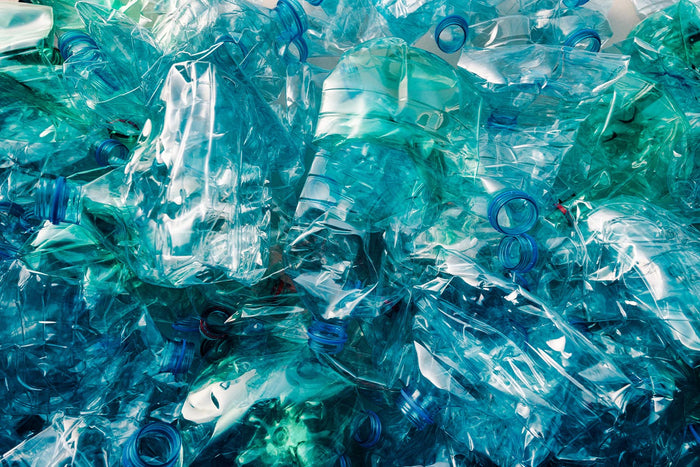
PET – Polyethylene terephthalate – is a thermoplastic that is easily molded when heated and can be processed multiple times into high-quality products. The material is particularly well-suited for bottles because it is lightweight and shatterproof. If a product consists of other plastic compounds, it cannot be recycled together with PET due to the different melting point. Therefore, other plastics are collected separately and, unfortunately, are mostly not recycled. Research is working feverishly to find ways to chemically recycle these plastics so they can be reused again and again, for example, through polymer technology.
PET recycling
A PET beverage bottle today consists of approximately 27 percent recycled plastic. This percentage is constantly increasing; in some bottles, it already reaches 50 percent or more. Recycled PET is a valuable material, known as RPET (recycled PET). It makes a significant contribution to reducing the enormous quantities of plastic waste and CO2 emissions.

The PET recycling cycle
We all recognize the symbol on single-use beverage containers. To recycle them, we take our bottles to the deposit return machine. The bottles are immediately crushed so that a large quantity can be transported away by truck. The material is then sorted by color, cleaned, and ground at the recycling plant. Some of the colorful, small "flakes" are used, for example, as stuffing for cuddly toys or for the production of films.
Bottle-to-bottle recycling
The primary use of food-grade recycled PET is to manufacture new bottles. The flakes are melted down and processed into regranulate. At the plastics processing plant, the regranulate is mixed with virgin granulate, heated, and melted. This mixture is then used to produce small preforms for new bottles. These are easy to transport and are inflated to full size and filled at the beverage bottling plant. Soft drinks, water, juices, milk and dairy products, as well as alcoholic beverages, can then be found in new PET bottles on supermarket shelves.

High recycling rate through deposit system
Thanks to the deposit system introduced in Germany in 2003, 98 percent of bottles are recycled. The more cycles the recycled PET (RPET) goes through, the greater the environmental benefit. Each cycle saves raw materials like petroleum. Incidentally, glass bottles aren't necessarily better than PET bottles in terms of their environmental impact. Transport weight and distance play a significant role. The closer the bottle is to the beverage bottler, the better.
Demand for recycled materials is increasing
High transport costs are one reason why around 80 percent of the recyclable material from PET recycling is now recycled directly in Germany. PET is not only needed for bottle-to-bottle recycling; it is also ideally suited for the production of a wide variety of products.
Approximately 23 percent of collected PET beverage bottles end up in the textile fiber industry. The white "flakes" are used, for example, to manufacture T-shirts, fleece clothing, or jacket linings. By melting down the PET, which is a polyester, it is processed into textile fibers. Five plastic bottles yield enough fibers for one size XL T-shirt.
LUVIYO yoga mats are produced from sustainable fabrics
Our yoga mats are also made from recycled PET. Fifteen PET bottles are used in the production of each of our all-in-one and travel yoga mats. Thanks to your support, 602,330 plastic bottles have already been recycled. Another component of our yoga mats is biodegradable natural rubber. The yoga mats are completely free of harmful substances and offer maximum comfort for your workout thanks to their non-slip, absorbent microfiber blend.
 Yoga in harmony with the environment
As yogis, it is especially important to all of us to live and act in harmony with the environment. Even if we can't always put everything into practice: constant dripping wears away the stone; every little drop is important. I'm sure you can think of more things; here are a few examples:
- Durable yoga equipment
- High-quality, sustainable yoga clothing instead of fast fashion
- regional, seasonal foods
- No waste, mindful handling
- Reusable cups, containers and bags instead of disposable packaging
For packaging, there are new environmentally friendly alternatives such as kraft paper or bags made from recycled plastic. We at LUVIYO use biodegradable bioplastic bags for shipping our yoga wear. Learn more here .
Reduce plastic waste
Unfortunately, only a very small percentage of all plastics produced worldwide are recycled. Tons of plastic waste float in the world's oceans, destroying our ecosystem. Microorganisms cannot break down these types of plastic. However, due to high demand and the requirements placed on the material, they continue to be mass-produced. This makes it all the more important that we live sustainably. Here are a few suggestions:
- largely avoid plastic
- Good care and long use of clothing, household items, furniture, sports equipment, etc.
- Pass things on to friends or those in need, or preserve them for the next generation.
- Secondhand
- Buy recycled products
Recycled PET is increasingly being used as a raw material for a wide variety of products. Modern backpacks, bags, and pet accessories are just as popular as sustainable sportswear and leisurewear.

From plastic bottle to lamp – upcycling
Upcycling breathes new life into an original object through reworking. Designers create artistic and practical items from plastic, PET, aluminum, wool, polyester, and other recyclable materials. Exciting live hack videos show you how to get creative yourself. Transform valuable materials into new things like lampshades, footstools, keychains, watering cans, decorative items, or wallets. And it saves you money, too!
Deine Reise geht weiter...
WEITER LESEN
ALLE LESEN Yoga
Yoga
Breathwork: How just a few minutes of conscious breathing a day can change your life
The hype surrounding breathwork Breathing exercises (or 'breathwork') are all the rage. Working with your own breath is so simple, yet it's one of the most effective tools for combating stress. When you talk to wellness experts about relaxation, you inevitably come across breathwork. For example, breathwork teacher and freediver...
Read Now
 Road
Road
Franzisca's path to resilience through cold water therapy and breathing exercises
Introduction In our latest episode of Road to Calm, we had the honor of interviewing Franzisca Gartenmann, co-founder of Keen Wellbeing. She shares her personal journey through burnout and trauma to a fulfilling life as an entrepreneur. 🌟 Franzisca talks about the benefits of cold water therapy, sauna, and breathing...
Read Now
 Road
Road
A journey through Katonah Yoga and personal growth
A journey through Katonah Yoga and personal growth In today's episode of the "Road to Calm Podcast," we speak with Aylin Karadayi, an inspiring Katonah Yoga teacher, former nutritionist, and experienced entrepreneur. She recently opened her latest project, the Yoga & Wellbeing Studio VVOO, in Zurich. Aylin shares her profound...
Read Now
 Yoga
Yoga
15-Minute Yoga Challenge
15-Minute Yoga Challenge – Find inner balance in one month Most of us try to be just as productive and active throughout the winter as we are in the summer. If we don't manage this, we quickly start berating ourselves, especially after the first few weeks of the new year,...
Read Now
#luviyofamily
We are social 💗
Follow us @luviyo and join our family!
Loved by Peter and many more...