
MOST READ
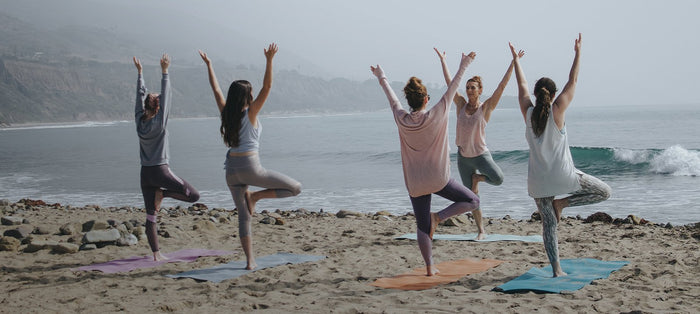
Have you ever thought about your breathing? Admittedly, you don't really need to, because breathing happens automatically in everyday life. Your breath supplies your body with vital oxygen and helps to transport waste products out of the cells. In yoga, however, breathing techniques (pranayama) play just as important a role as the actual yoga postures (asanas), and for good reason.

"Prana" refers to the life energy that permeates everything – and also to breath, which for yogis represents the most direct expression of this life energy. This makes sense, since our life begins with the first breath and ends with the last. The second part of the word, "Ayama," translates roughly as control. Taken together, Pranayama stands for the control of life energy through breathing techniques.
And the right breathing technique makes your yoga practice even more effective. That's why some teachers explain how you should ideally breathe during each asana. But what if that doesn't happen in your class, or if you're just practicing on your own?
In this article, we will show you how to check your breathing yourself and how you can use various breathing techniques to boost not only your yoga practice, but also your body and mind through natural breathing.
Breath is the king of the mind. B.K.S. Iyengar
How is your prana?
Do you know how to breathe properly, or do you have to relearn it? Wait a minute—why relearn it? Didn't we just say it happens completely automatically? True, newborn babies usually breathe naturally and deeply into their bellies. If you observe an infant, you'll notice that their tummy moves up and down noticeably. They're practicing completely natural breathing.
But as the baby grows, stress inevitably sets in. The older it gets, the more demands are placed on it, and the more pressure rests on its shoulders. And this eventually affects its breathing. Stress or emotional strain can cause it to become shallow without you even noticing.
This causes the abdomen to tense up, and the air only reaches the upper part of the chest. This has little to do with restorative, deep abdominal breathing. This shallow breathing no longer supplies your body with enough oxygen – which also negatively impacts your concentration.

Yoga helps you breathe freely again when you're stressed and under pressure.
What can be done about shallow breathing?
Negative emotions can affect your breathing. But this effect also works in reverse: With the right breathing technique, you can calm your body and mind, slow your pulse – and relax more overall.
Imagine you're playing someone in a film who is completely distraught and angry. You'd probably change your breathing to get into that state. You'd breathe faster, more rapidly, and much more shallowly. In short, your breathing would help you find the right emotional state for your role.
However, if you breathe slowly and calmly, the exact opposite happens. You notice that you become more relaxed and serene – and you have more energy overall. Even your mood improves through deep breathing. So it's no wonder that breathing techniques are so important in yoga.
You can find out if you also breathe too shallowly in everyday life by simply sitting or lying down quietly and observing your breathing. Is it even or irregular? Does your abdomen rise when you inhale, or do only your ribs expand? Just observe your breathing at first, without interfering.
You can also recognize natural breathing by the following characteristics:
1. When you inhale, your pelvic floor lowers and expands. When you exhale, it contracts and rises again.
To locate your pelvic floor, the following tip will help: Your pelvic floor consists of muscles and closes off your abdominal cavity and the organs in your pelvis from below. You tense your pelvic floor muscles, for example, when you urgently need to urinate.
2. When you inhale, your collarbones rise and rotate slightly upwards. When you exhale, they lower again.
It can help to sit in front of a large mirror to closely observe your collarbones.
3. Your upper arms rotate slightly outwards when you inhale and back inwards when you exhale.
Use a mirror here too if you are unsure whether your body awareness alone is sufficient for your assessment.
Done? Don't panic if you've noticed you're breathing shallowly: you can definitely relearn proper breathing. The following section provides instructions on how to get back to deep breathing.
Back to the depths: Three exercises for more air
If you notice that your breathing is no longer natural and you're only breathing shallowly into your upper chest, simply try the following breathing techniques. Lie on your back. For example, you can rest your upper body on a folded blanket so that your head is slightly elevated.
1. Breathing technique: Abdomen Position your hands slightly above your navel on your abdomen, so that your middle fingers touch.
Now, when you breathe with your diaphragm, your belly will rise and your fingertips will separate. Breathe deeply into your belly several times in this way, allowing it to expand in all directions.
2. Breathing technique: Mid-chest area. Now place your hands on the sides of your ribs.
Now breathe into your chest and feel your ribs expand slightly to the sides. Repeat this breathing exercise several times.
3. Breathing technique: Upper chest area
Position your hands so that your index fingers rest on your collarbones. Now breathe in a way that allows you to feel your chest expand slightly upwards. This is where you will experience the smallest range of motion and the greatest resistance. Repeat this exercise several times.
Ideally, you should consciously practice these three breathing techniques regularly. This will gradually help you return to natural breathing that adequately supplies you with oxygen. These exercises also optimally prepare you for the various pranayama techniques in yoga practice.
Other breathing techniques in yoga

Liberated and revitalized: Breathing techniques are enormously effective
As you know, in addition to the asanas in yoga, there are also pure breathing techniques called pranayama, which you perform while sitting or lying still – without any movement. These breathing exercises have a stimulating or calming effect on body and mind, depending on the technique. Examples include breath of fire, alternate nostril breathing, and complete yogic breathing.
All these exercises can greatly enhance your yoga practice. The combination of proper breathing and asanas is precisely what defines yoga – ultimately, it's about the harmony of body and mind. Relaxing yoga exercises offer a perfect complement, rounding out your yoga practice and enriching your everyday life.
What you should keep in mind during Pranayama
You can learn pranayama on your own, but it's more beneficial to practice it from scratch with your yoga teacher first. These breathing techniques may seem unspectacular, but they're quite complex. And there's a lot to keep in mind.
You should approach these exercises with caution if you are pregnant or have recently undergone major surgery. Those unfamiliar with the techniques may sweat profusely and even experience circulatory problems. Traditionally, smokers are advised to avoid the exercises altogether, as some yogis believe that deep breathing causes too many harmful substances to enter the lungs.
Wow, you might be thinking, it's just breathing. But this shows you how incredibly effective these exercises are. That's why it's so important that you learn them correctly.
How to integrate conscious breathing into your daily yoga practice 

Once you get the hang of it, you should choose your favorite exercises and practice them regularly. Traditionally, the rule is that pranayama should ideally be practiced daily. For example, how about doing a round of fire breathing in the morning after getting up to start the day full of energy?
Make your exercises a short daily ritual. Pranayama only unfolds its full effect over time. Therefore, you should stick with it and integrate it into your daily routine. This will also support your yoga practice and allow you to benefit even more from its healing effects.
Of course, you should always pay attention to correct breathing when practicing all your asanas. If you don't receive specific breathing instructions in your yoga class, or if you prefer to practice on your own, we've compiled an overview for you here.
The following rules of thumb have proven effective for breathing on the yoga mat:
-
Inhale when you are in the starting position.
-
Exhale when you bend forward or to the side.
-
Inhale as you perform a backbend.
-
If you have high blood pressure or heart problems, you should not hold your breath.
Combine these guidelines with conscious, deep breathing and you will soon notice how the execution of your yoga exercises becomes more effective and you gradually come into harmony with yourself.
Breathing in everyday life
One last tip: In yoga class, you usually already focus your attention on proper breathing. But the trick is to do this in everyday life as well. Observe your breath regularly, for example, when you're standing in line at the supermarket checkout.
If you're feeling particularly agitated, try this short exercise: Simply exhale for a longer time than you inhale. For example, count to four while inhaling and to six while exhaling. This breathing technique can lower your heart rate and calm you down. It can also work wonders if you have trouble falling asleep.
Just try it out – you might develop such a taste for it that breathing techniques become a part of your everyday life. Your body and mind will thank you.
Deine Reise geht weiter...
WEITER LESEN
ALLE LESEN Yoga
Yoga
Breathwork: How just a few minutes of conscious breathing a day can change your life
The hype surrounding breathwork Breathing exercises (or 'breathwork') are all the rage. Working with your own breath is so simple, yet it's one of the most effective tools for combating stress. When you talk to wellness experts about relaxation, you inevitably come across breathwork. For example, breathwork teacher and freediver...
Read Now
 Road
Road
Franzisca's path to resilience through cold water therapy and breathing exercises
Introduction In our latest episode of Road to Calm, we had the honor of interviewing Franzisca Gartenmann, co-founder of Keen Wellbeing. She shares her personal journey through burnout and trauma to a fulfilling life as an entrepreneur. 🌟 Franzisca talks about the benefits of cold water therapy, sauna, and breathing...
Read Now
 Road
Road
A journey through Katonah Yoga and personal growth
A journey through Katonah Yoga and personal growth In today's episode of the "Road to Calm Podcast," we speak with Aylin Karadayi, an inspiring Katonah Yoga teacher, former nutritionist, and experienced entrepreneur. She recently opened her latest project, the Yoga & Wellbeing Studio VVOO, in Zurich. Aylin shares her profound...
Read Now
 Yoga
Yoga
15-Minute Yoga Challenge
15-Minute Yoga Challenge – Find inner balance in one month Most of us try to be just as productive and active throughout the winter as we are in the summer. If we don't manage this, we quickly start berating ourselves, especially after the first few weeks of the new year,...
Read Now
#luviyofamily
We are social 💗
Follow us @luviyo and join our family!
Loved by Peter and many more...