
MOST READ
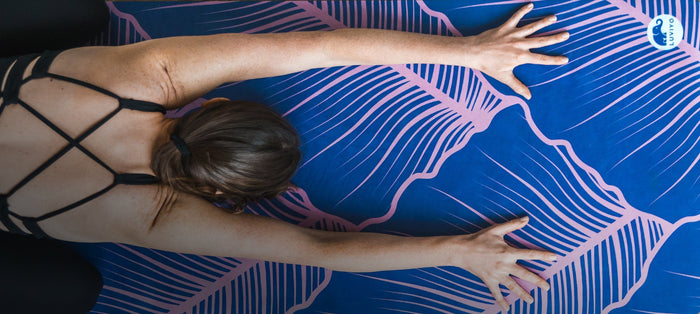
It costs us nothing and even saves time to own less. So why is it still so hard to let go? We keep birthday cards or postcards, small gifts from people who are important to us, or things that remind us of special moments. And before you know it, you have a thousand things that often just lie around.
Even when everything is put away, there's still never a sense of order that radiates tranquility. Yoga has already shown you how to create inner order and peace. But your surroundings also influence your inner peace. We'll show you how to bring your inner and outer worlds into harmony and balance. With our little minimalism guide, you can apply your yoga skills in the kitchen, your wardrobe, or other rooms.

What exactly is minimalism?
Minimalism is the focus on the essentials. The term is derived from the Latin word minimus, meaning 'the least'. Minimalism describes a lifestyle that rejects excessive consumption and possession of material things in order to focus on what is truly important. Minimalists do not experience this kind of restraint as a limitation, but rather as a liberating feeling that enables a self-determined, fulfilling life.
What does yoga have to do with minimalism?
Yoga is simple:
-
All you need is yourself and your mat
-
You don't have to go anywhere.
-
You don't need any equipment.
-
All you need is you and a little bit of space.
Yoga teaches us to live in the here and now – the best prerequisite for becoming a true minimalist. When you can focus your attention on what truly matters in this moment, you more easily see what is superfluous.
Many of the things we own actually belong to the past or to a future yet to be realized. Perhaps it's the worn shoes that remind you of wonderful trips, or the origami kit you've always wanted to try. Minimalism means letting go of these things in order to fully arrive in the here and now.

Aparigraha, one of the eight pillars of yoga , represents the absence of desire and the ability to let go. Fear compels us to cling. But when we trust in letting go, we suddenly experience a feeling of freedom.
In the Yoga Sutras, among the Niyamas (recommendations for self-care), you'll find the term Santosa, which stands for 'lived contentment'. Through yoga, one learns to affirm life and to find joy in the things and people one has in one's life. Minimalism takes up the idea of appreciation and emphasizes that less possessions lead to greater contentment.
Another Niyama is Sauca, which translates as 'cleanliness'. Sauca can refer to one's own body, but also to one's surroundings. If your home or workplace is clean and tidy, so too can your mind be. Often, the order around us reflects our inner state.
Our 4 minimalism tips
1. Start your personal minimalism challenge
First, you should ask yourself why you want to live a minimalist lifestyle and why you haven't done so yet. Consider who and what is truly important to you in your life. Do you have enough space for these essential elements? Or are you often preoccupied with other things that distract you?
It takes you ages in the morning to decide what to wear, you change your outfit three times, and still feel like you have nothing in your closet. This often happens when you have too many choices. Just as overwhelming can be the feeling of not having enough time for friends and family because you have a hundred things on your to-do list for the weekend.
Figure out why you can't focus on what's essential and determine which things should be prioritized and which should be pushed into the background. This will make it easier for you to implement minimalism in the long term .
2. Minimalism in the wardrobe – decluttering
Decluttering has become incredibly popular again, especially since the Marie Kondo method . Following the motto "I only keep what sparks joy," you can get rid of anything that distracts you instead of bringing you fulfillment. Once you've figured out why less is your new more, you can start decluttering.

Video: Proper sorting with KonMari
Clear your living space to clear your mind.
The more things you own, the more time you need to sort them and keep them organized. It's best to start small, with a kitchen drawer, a wardrobe, or a bookshelf. Take the first item and ask yourself if you use it and if you truly love it. If not, it has to go.
A minimalist lifestyle is time-efficient and environmentally friendly. To prevent perfectly good items from simply ending up in the trash, you can sell, give away, or swap unused things . We think giving things away is a great solution, because it allows you to practice Aparigraha, the art of non-attachment, and it's truly enjoyable to bring joy to others.
3. Consume minimally, fairly and sustainably
Minimalism as a lifestyle arose as a response to our consumerism. After decluttering, we're often tempted to fill the empty space with new things. We buy too much, too often, too thoughtlessly. If something breaks, we simply replace it with something new. If something gets boring, we just buy something else. But does this really bring us lasting satisfaction? Often it's just a fleeting high, quickly followed by the desire for more. We've lost our sense of santosa – the ability to appreciate things.
As difficult as it is to change one's consumption habits, the minimalist concept is simple. Buying less often but choosing more carefully means the enjoyment lasts longer. Add to that the sustainability aspect, which we at LUVIYO take very seriously. That's why our ultra-durable yoga mats are made from environmentally friendly natural rubber . Thanks to the non-slip material, you can even do without a towel.
Ahimsa, from the Yoga Sutras, stands for a non-violent way of life. This also includes consciously buying fair trade products, from choosing your groceries to your yoga mat. Did you know that every purchase at LUVIYO benefits elephants in need ?
4. Minimalism in Yoga
Yoga is primarily about getting rid of distractions. Through yoga, you learn to simplify things to create clarity. Excess baggage prevents you from calming your mind and filling your heart with contentment.
Burden can be mental as well as physical. You've probably noticed that you find it easier to get into your flow in some places than others. Often, the peace and order that a yoga space exudes also allows your inner self to relax.
Regular mindfulness meditation is a great way to rediscover appreciation for things and train your focus on what's essential. This also helps prevent relapses and succumbing to shopping sprees.
Live the minimalism lifestyle

Thanks to your yoga experience, you already possess minimalist traits. Now it's up to you to apply this to other areas of your life. The best way to start is by creating a list of your favorite and most essential things.
And don't forget your LUVIYO ;)
Deine Reise geht weiter...
WEITER LESEN
ALLE LESEN Yoga
Yoga
Breathwork: How just a few minutes of conscious breathing a day can change your life
The hype surrounding breathwork Breathing exercises (or 'breathwork') are all the rage. Working with your own breath is so simple, yet it's one of the most effective tools for combating stress. When you talk to wellness experts about relaxation, you inevitably come across breathwork. For example, breathwork teacher and freediver...
Read Now
 Road
Road
Franzisca's path to resilience through cold water therapy and breathing exercises
Introduction In our latest episode of Road to Calm, we had the honor of interviewing Franzisca Gartenmann, co-founder of Keen Wellbeing. She shares her personal journey through burnout and trauma to a fulfilling life as an entrepreneur. 🌟 Franzisca talks about the benefits of cold water therapy, sauna, and breathing...
Read Now
 Road
Road
A journey through Katonah Yoga and personal growth
A journey through Katonah Yoga and personal growth In today's episode of the "Road to Calm Podcast," we speak with Aylin Karadayi, an inspiring Katonah Yoga teacher, former nutritionist, and experienced entrepreneur. She recently opened her latest project, the Yoga & Wellbeing Studio VVOO, in Zurich. Aylin shares her profound...
Read Now
 Yoga
Yoga
15-Minute Yoga Challenge
15-Minute Yoga Challenge – Find inner balance in one month Most of us try to be just as productive and active throughout the winter as we are in the summer. If we don't manage this, we quickly start berating ourselves, especially after the first few weeks of the new year,...
Read Now
#luviyofamily
We are social 💗
Follow us @luviyo and join our family!
Loved by Peter and many more...